
Author
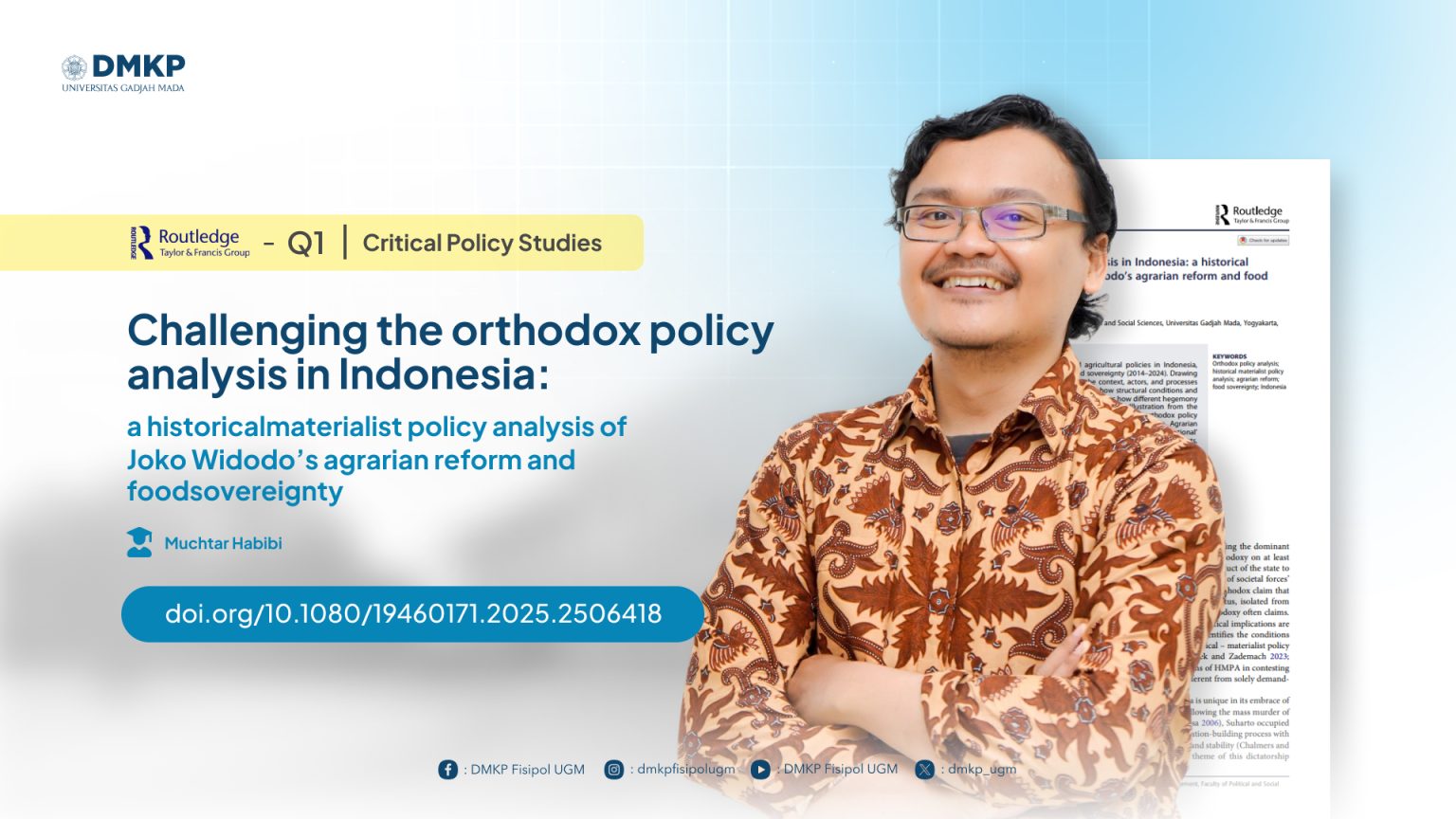
Muchtar Habibi
Abstract
This study scrutinizes the dynamics of land and agricultural policies in Indonesia, particularly Joko Widodo’s agrarian reform and food sovereignty (2014–2024). Drawing on historical materialist policy analysis, it identifies the context, actors, and processes that shape the trajectories of current practices. It shows how structural conditions and social contradictions of agrarian change in the past conditions how different hegemony projects contest each other to occupy a hegemonic position. Illustration from the agrarian reform and food sovereignty policymaking challenges the orthodox policy analysis in Indonesia, which has been dominant since the Suharto regime. Agrarian reform and food sovereignty in the country are not an isolated product of the ‘rational’ state apparatus in taking care of public affairs, as orthodox policy analysis often suggests. They are, rather, the product of an unstable compromise among social forces formulated by the state apparatus. Hence, relying on ‘government political will,’ demanding the state apparatus to be ‘rational’ and use more ‘knowledge’ to create effective land and agricultural policies, as orthodox policy analysts often insist, is neither desirable nor realistic. It is only by rebalancing the power of hegemony projects that a more genuine paradigm of agrarian reform and food sovereignty may be introduced.
Keywords
Orthodox policy analysis, historical materialist policy analysis, agrarian reform, food sovereignty, Indonesia
Access link:
https://doi.org/10.1080/19460171.2025.2506418